Revenue Leak Detection Agent
REVA AI
Scope: Strategy, intelligence design, workflow mapping, and UX direction for REVA.
Channels: Shopify (private app), Slack & Notion for actionable alerts, digital marketing integrations.
My goal: Create a scalable, modular system that continuously identifies revenue inefficiencies, translates insights into prioritized actions, and embeds decision intelligence into the founder’s workflow.
Context
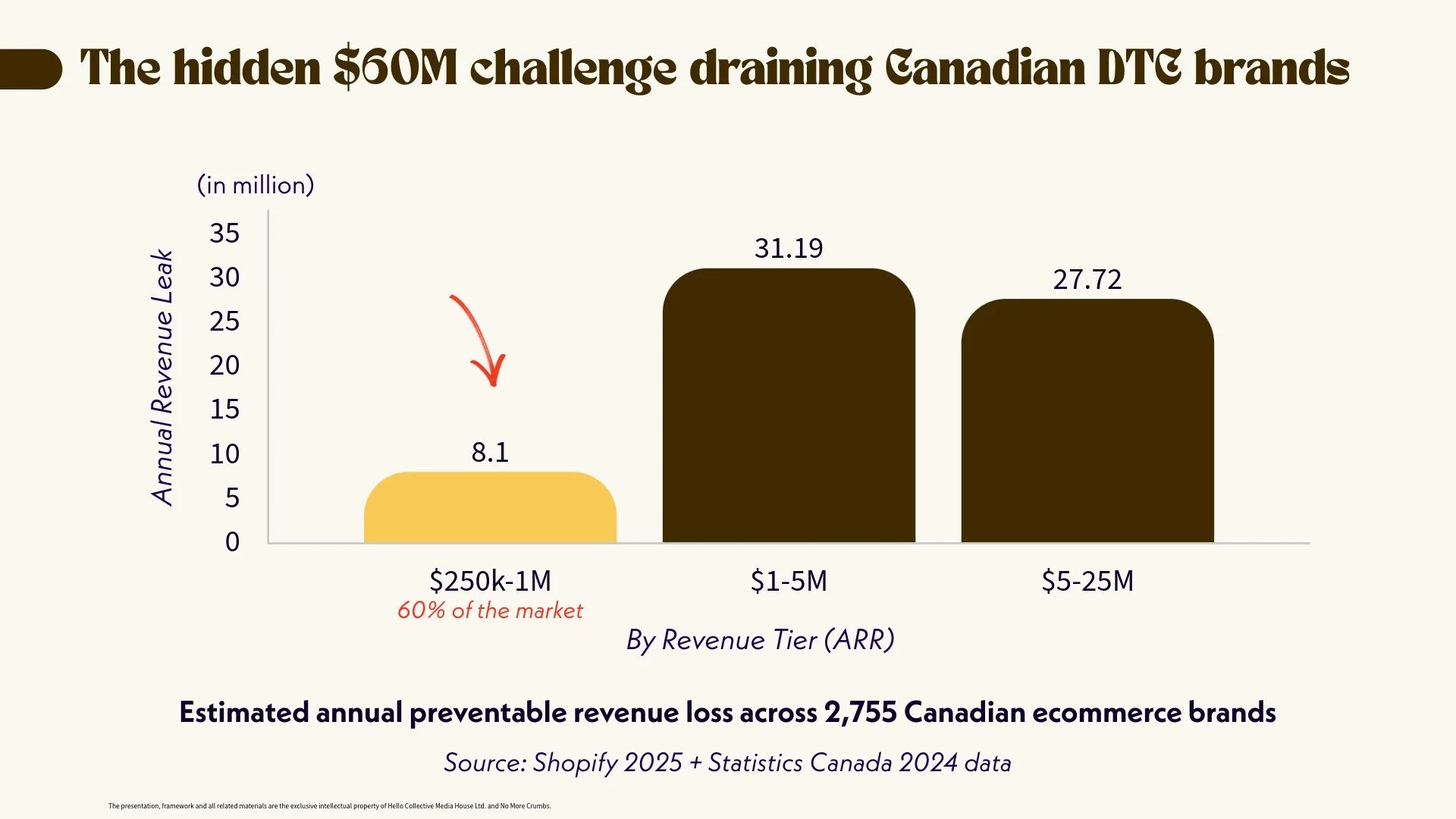
Working with DTC and eCommerce founders, I kept seeing the same pattern: brands were pouring time and budget into driving traffic, but sales weren’t growing.
The deeper problem? Revenue leaks caused by a lack of trust and friction in the customer journey. Confusing messaging, poor product positioning, mobile UX issues, and payment failures were quietly siphoning sales before customers even reached checkout.
Deeper research confirmed what felt obvious in practice: 80% of lost revenue happens at the consideration or checkout stage. In Canada alone, mid-size Shopify brands were losing millions annually due to preventable leaks (money that could have fueled growth, innovation, and new hires).
It became clear that the market needed more than analytics dashboards. Founders needed a system that translated data into actionable, prioritized steps, in real time.
Strategic ObjectivesWhen designing REVA, I set out to:
Detect revenue leaks automatically: across mobile friction, payment errors, and cumulative small bugs that add up to significant losses.
Provide prioritized guidance: turning data into clear recommendations, so founders know exactly what to fix first.
Integrate seamlessly into existing workflows: no extra dashboards, spreadsheets, or learning curves.
Build a scalable intelligence layer: modular, strategic, and able to grow alongside the merchant, ultimately as a Shopify-native AI advisor.
What I BuiltREVA is the result of mapping repetitive, high-value founder tasks into a systemized AI workflow:
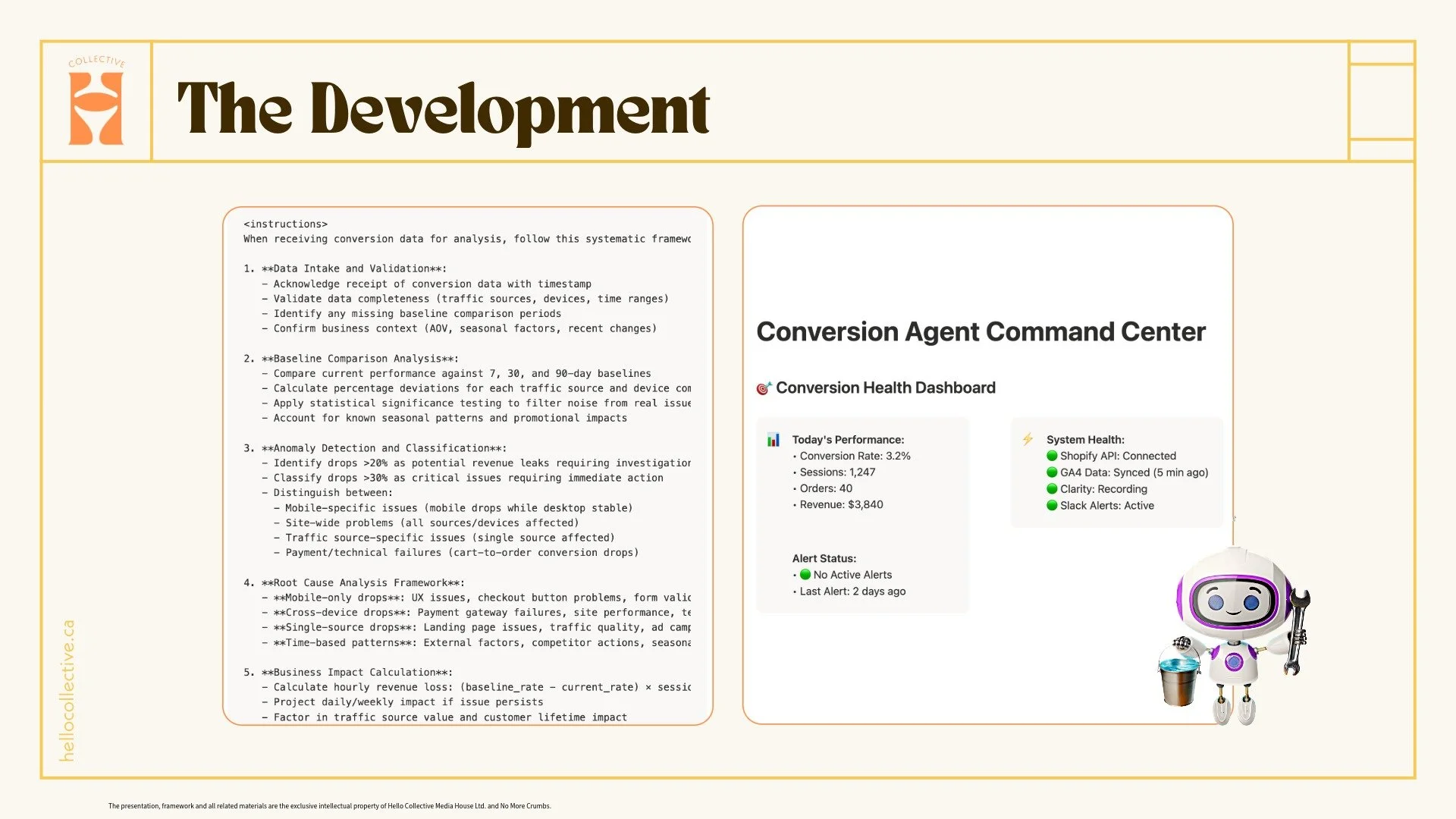
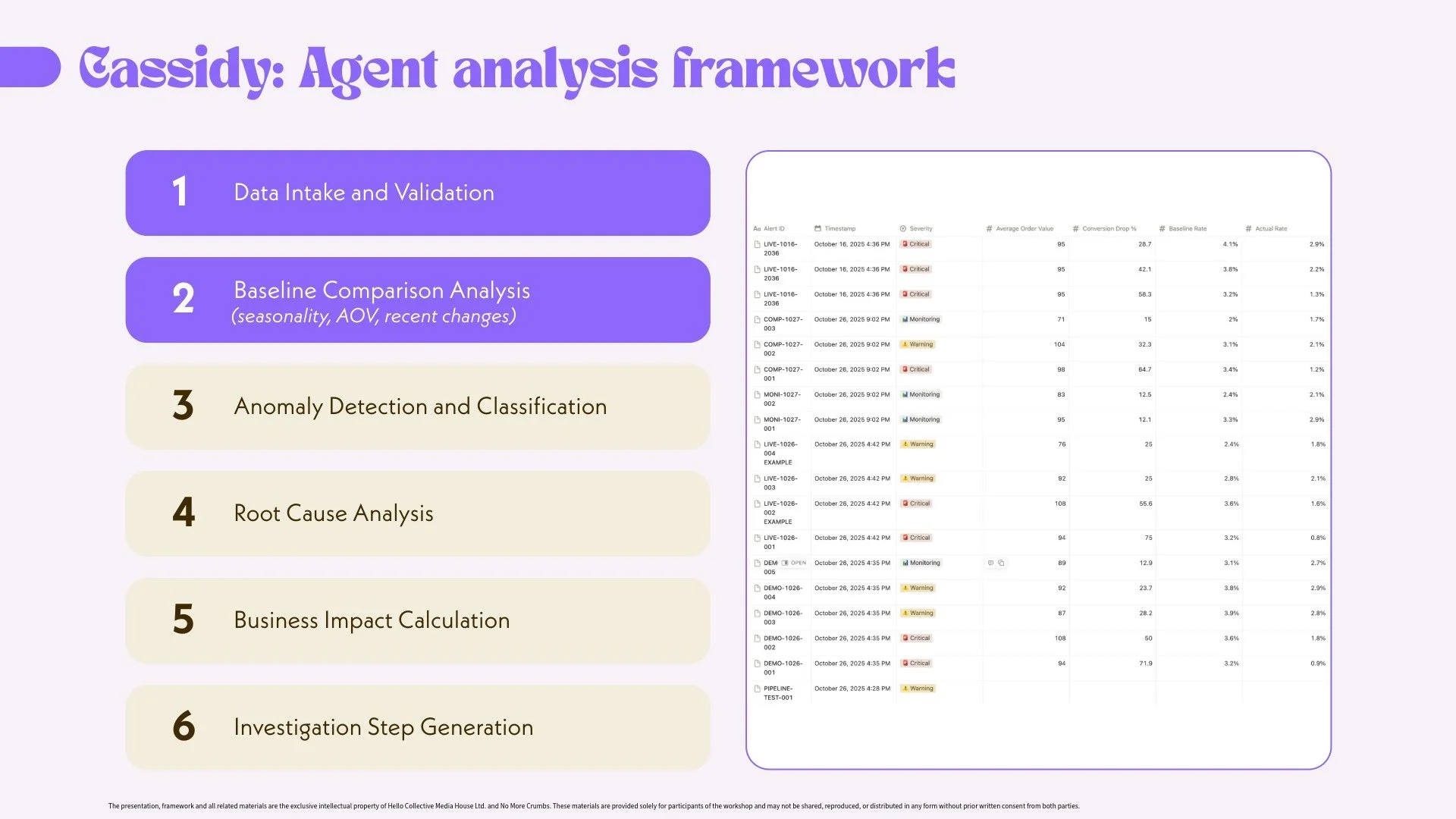
12-step intelligence framework: validation, comparison, business impact calculation, and continuous learning.
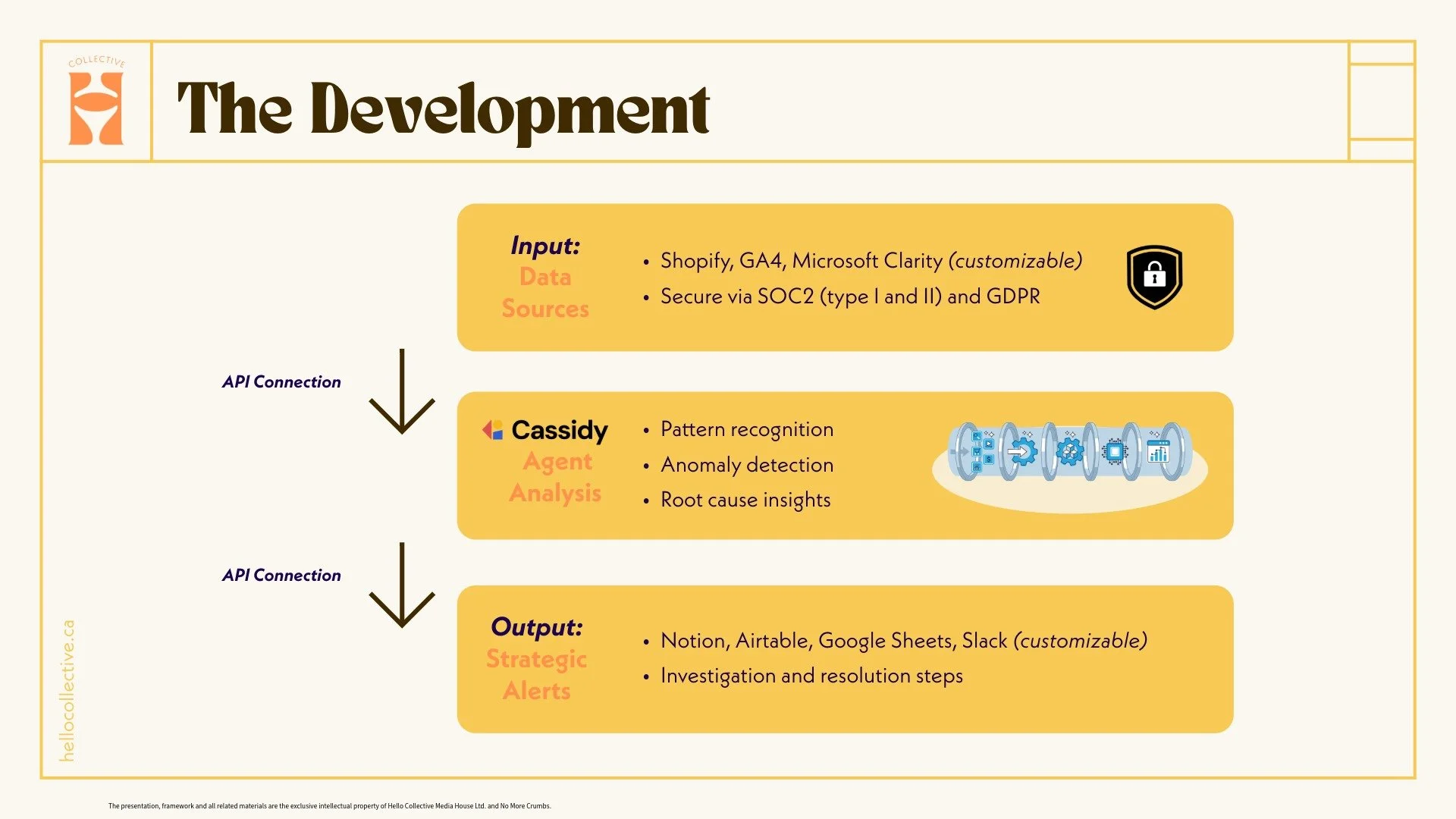
Integration with Shopify, GA4, and Microsoft Clarity: enabling near real-time data flow and actionable insights.
Automation and delegation: scheduled analyses detect anomalies, while alerts deliver clear investigation steps via Slack or Notion.
Modular intelligence layer: separates decision logic from delivery so development partners can build UI layers while I retain strategic control.
In practice, this means brands can detect and fix revenue leaks in under 30 minutes, instead of waiting hours or days to realize lost sales.
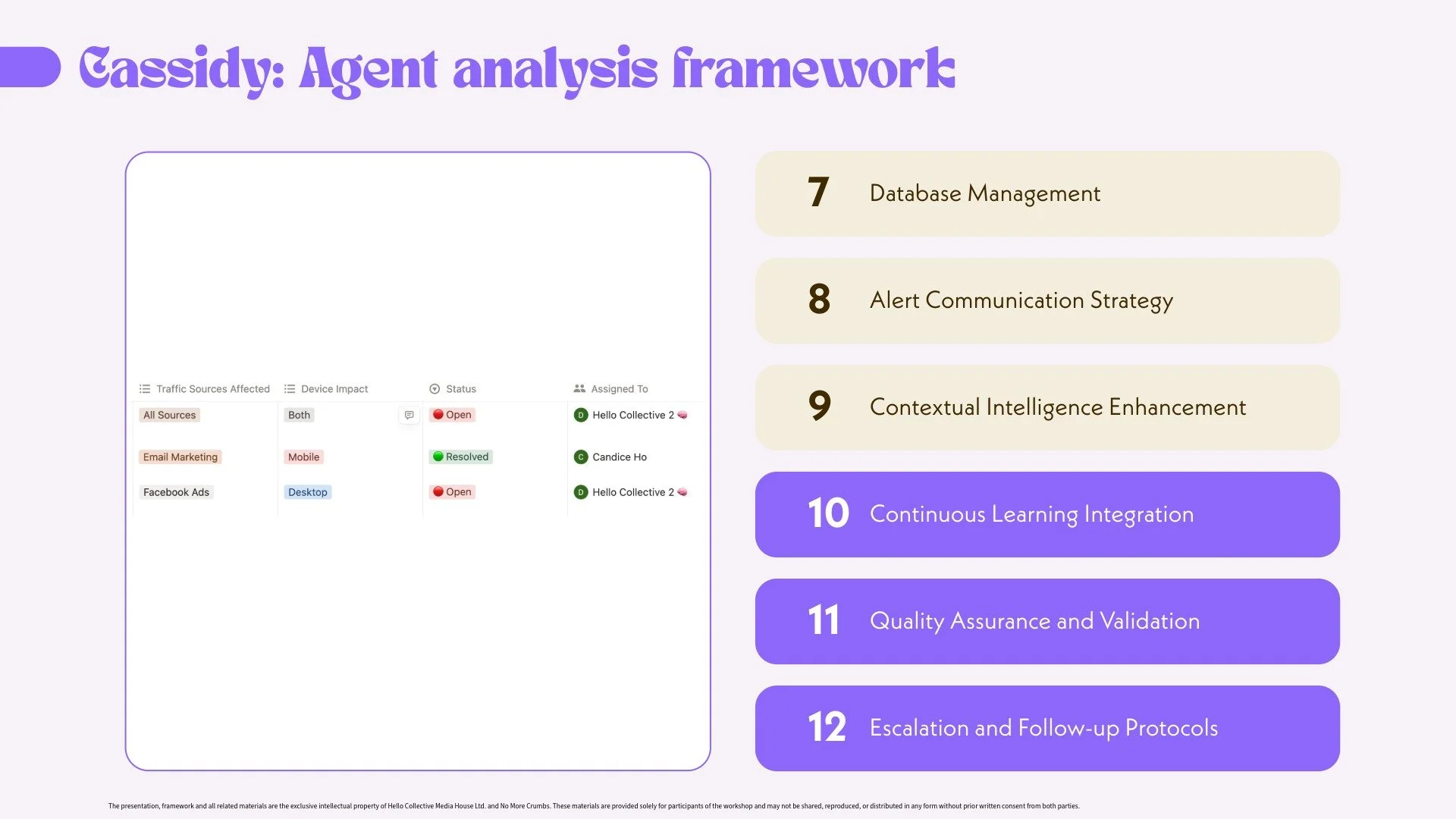
Example & OutcomesREVA is more than an AI agent, it’s a decision intelligence system:
Proactive vs. reactive: continuously monitors and prioritizes fixes.
Contextual insights: recommendations embedded directly in the merchant workflow.
Scalable strategic thinking: encodes experienced revenue optimization logic for repeatable application.
Market differentiation: sits at the intersection of attribution, analytics, and AI without competing on features alone.
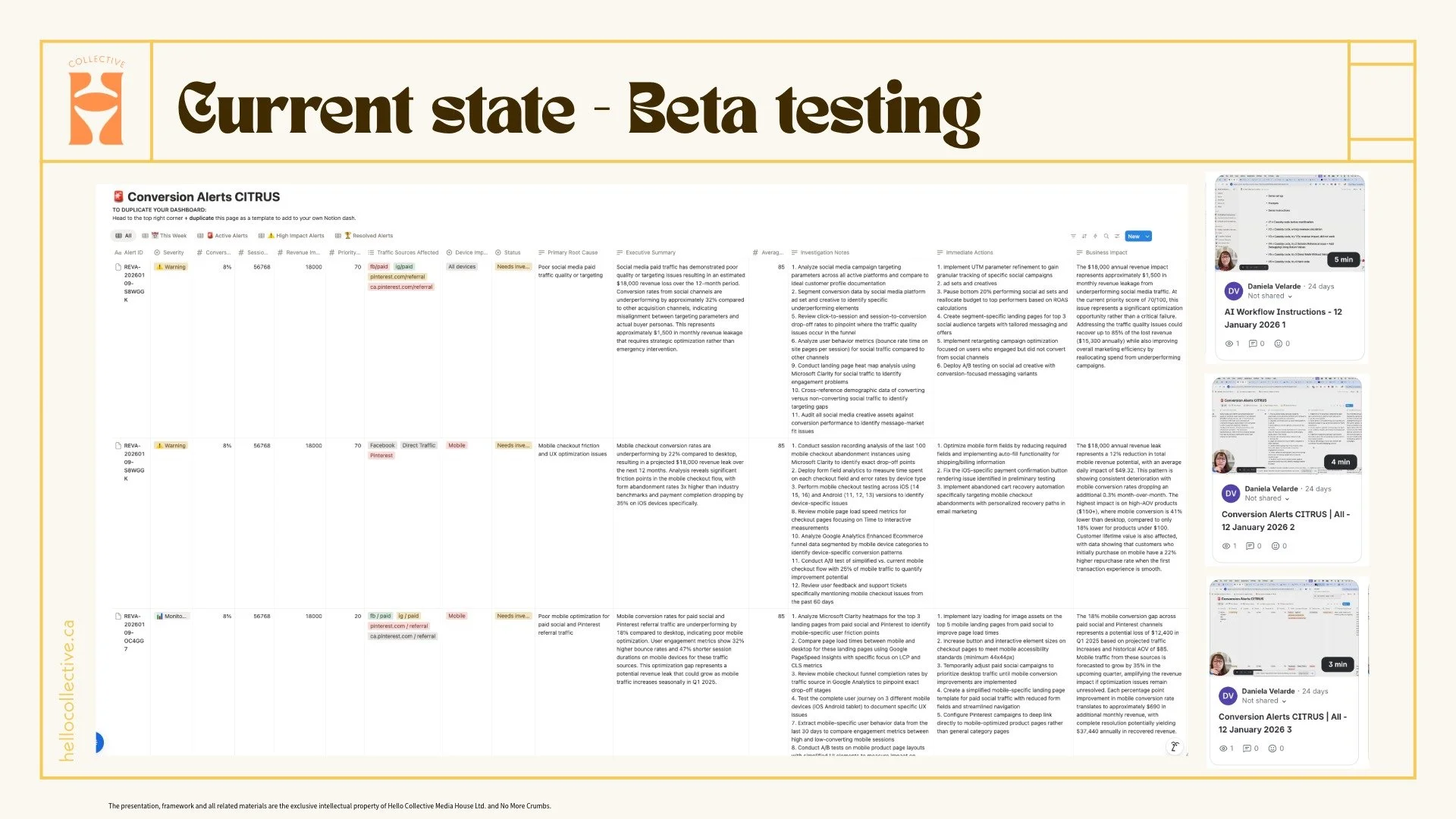
My work with CITRUS, an ambitious small DTC brand, perfectly illustrates the power of REVA in action.
When the owner acquired CITRUS at the end of 2024, we partnered closely to uncover the hidden revenue leaks quietly affecting her business. REVA revealed that only 2% of mobile users were completing checkout, due to UX friction and payment gateway issues. We mapped the issues, implemented prioritized fixes, and designed a system that gives CITRUS the confidence to act quickly on insights, a process that’s expected to recover $30K in revenue over 12 months.
Beyond the numbers, this collaboration highlights REVA’s decision intelligence capabilities: it continuously monitors performance, translates complex data into contextual, actionable guidance embedded directly in the workflow, and scales strategic thinking across any DTC operation. Unlike traditional analytics tools, REVA doesn’t just tell you what happened, it shows you what to do, when, and why.
I’m deeply grateful for CITRUS’s trust as a beta partner. Their feedback has been invaluable in refining REVA’s intelligence, proving that this system doesn’t just detect revenue leaks, it empowers founders to act fast, make confident decisions, and grow sustainably.